Refractive Surgery & LASIK Evaluation
Expert ophthalmic care with a clear, patient-first approach in Habsiguda, Hyderabad.

Refractive Surgery & LASIK Evaluation
Refractive procedures are considered only after checking corneal health, refraction, eye surface and other factors that can affect suitability and visual outcomes.
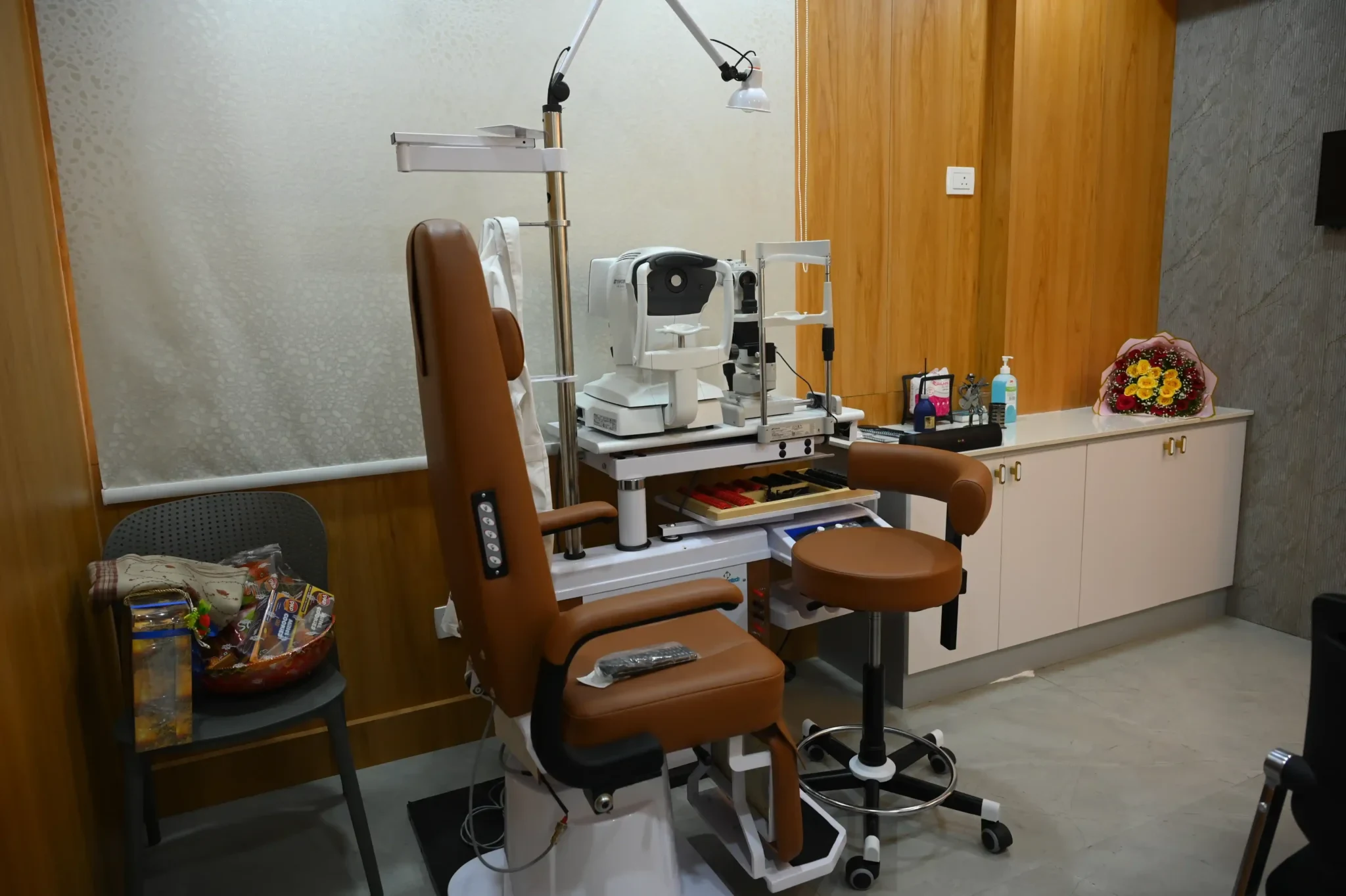
What this service involves
Care begins with a detailed ophthalmic history and examination. Depending on the clinical question, your ophthalmologist may recommend vision testing, eye pressure measurement, slit-lamp examination, retinal imaging, OCT, corneal mapping, visual field testing or other investigations.
Who may benefit from evaluation?
- Patients with new or changing vision symptoms.
- People with known eye conditions who need ongoing monitoring.
- Patients considering surgery or a procedure after a suitability assessment.
- Children or older adults who need age-appropriate vision and eye-health evaluation.
Treatment planning
Treatment is based on the diagnosis, severity, eye health, medical history and the patient’s visual goals. Surgical suitability is determined after clinical evaluation; no single procedure is appropriate for every patient.
Why follow-up matters
Some eye conditions need periodic monitoring even when symptoms are minimal. Follow-up intervals depend on the condition, test findings and treatment plan.
Have questions about refractive surgery & lasik evaluation?
A clinical consultation can help determine which tests and treatment options are appropriate for your eyes.
Common questions about Refractive Surgery & LASIK Evaluation
Clear, concise answers to help patients understand the service before booking a consultation.
01What refractive procedures are discussed?
The clinic lists LASIK, PRK, SMILE and ICL as refractive surgery options that may be assessed for suitability.
02Can everyone have LASIK or SMILE?
No. Suitability depends on factors such as refractive error, corneal measurements, eye health, age and other clinical findings.
03Why are corneal measurements important?
Corneal mapping and related measurements help the clinician assess corneal shape and thickness and determine whether a refractive procedure is appropriate.
04What happens during a refractive surgery consultation?
The evaluation may include refraction, corneal assessment, eye health checks and discussion of your visual goals and expectations.
05Which procedure is best for me?
There is no single best procedure for everyone. The appropriate option is selected after a detailed clinical assessment.